

Trailer Component Manufacturing: Engineering the Details That Matter in OEM Supply
Time:November 10, 2026
A trailer component does not work in isolation.
A rear lamp depends on its mounting position and electrical co
nnection. A coupling must fit both the drawbar and the tow ball. A jockey wheel needs to support the required load while clearing the trailer frame when raised.
Each part can be manufactured correctly and still cause problems if its interfaces are not defined clearly. For trailer OEMs, this can mean extra assembly work, installation errors or a part that cannot be used on the intended vehicle.
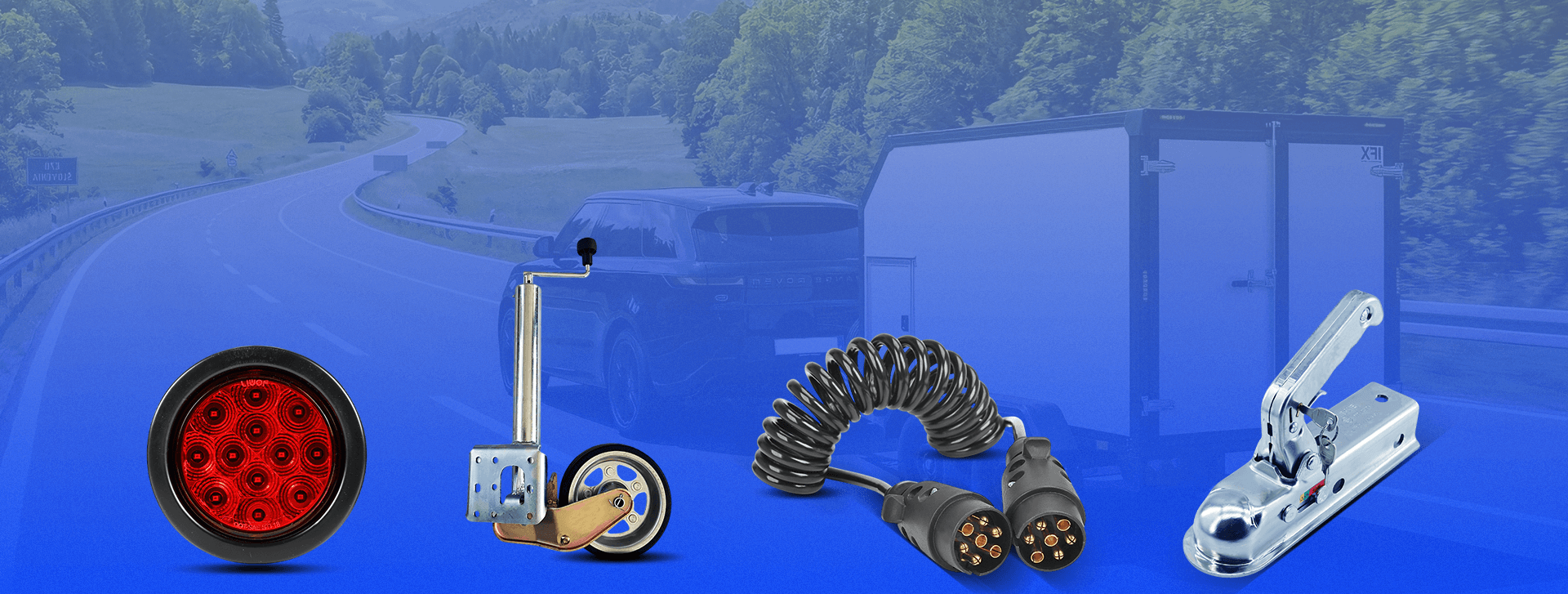
At Ningbo ERA VEHICLE, we approach trailer component supply by looking at the application, the interfaces between parts and the information needed to verify the finished product. Our range includes trailer lighting under the LIWOF brand, wiring harnesses, couplings, jockey wheels and related components.
This article explains the engineering considerations behind those products and what buyers should review when selecting a manufacturing partner.
The specification for a component should begin with the trailer on which it will be installed.
For example, a rear lamp may have the required dimensions but an incompatible connector. A coupling may fit a 50 mm tow ball but be designed for a different drawbar section. Both issues can be missed if the product is selected from a photograph alone.
For a new project, the most useful starting information is:
| Design input | Questions to resolve |
|---|---|
| Trailer application | What type of trailer is being built, and how will it be used? |
| Destination market | Where will the trailer or replacement part be sold? |
| Installation space | What are the available mounting dimensions and clearances? |
| Electrical requirements | Which voltage, functions, connectors and wiring arrangement are required? |
| Mechanical requirements | What loads, interfaces and mounting arrangements must be supported? |
| Operating environment | Will the component be exposed to road spray, dirt, vibration or immersion? |
| Supply requirements | What quantity, packaging and documentation does the buyer need? |
A complete drawing is helpful, but it is not always available at the start. An existing component, sample, installation photograph or preliminary drawing can be used to identify the information that still needs to be confirmed.
Trailer lighting is often specified by lamp shape, voltage and number of functions. Those details matter, but the electrical and mechanical interfaces are just as important.
Before recommending a lamp or lighting kit, we review:
A well-defined lighting specification helps the OEM compare a proposed part with the vehicle design before committing to tooling or production.
A connector described as “5-pin” gives the number of contacts, but it does not fully define the interface. The housing shape, keying, terminal layout, locking method and sealing design must also match.
The same applies to wiring. Two harnesses can look similar while assigning different functions to the same pin positions.
For an OEM harness, the drawing should identify the connector reference, wire functions, branch positions and finished lengths. Where an existing lamp or harness is being replaced, a confirmed mating sample can help establish whether the proposed connection is suitable.
For procurement teams, the practical question is: can the proposed lamp and harness be assembled on the trailer without changing the connector, extending the cable or modifying the mounting area?
Resolving that question early reduces the risk of discovering a mismatch on the production line.
A lamp’s appearance in a product photograph tells a buyer very little about its measured optical performance.
The relevant question is how the lamp performs in the direction and under the conditions required for its intended signalling function. Photometric evaluation considers light output at specified measurement points; the applicable requirements depend on the lamp function and regulatory framework. UN Regulation No. 148, for example, includes provisions for photometric measurements of light-signalling devices. unece.org
The photograph and video below show an ERA VEHICLE 86122 round trailer lamp during an optical testing session. The lamp is mounted on a fixture, connected and illuminated in the test environment.
[Insert 86122 optical testing photograph here]
Caption: ERA VEHICLE 86122 trailer lamp mounted for optical testing.
[Insert 86122 optical testing video here]
Video caption: 86122 trailer lamp illuminated during an optical testing session.
The footage provides a view of the test setup. It does not show the numerical results or establish which regulatory requirements were met. To assess the lamp for a specific project, the buyer should review the corresponding technical documentation.
A useful review connects five pieces of information:
This distinction matters when a product family contains different lens, LED or wiring configurations. A report should correspond to the product version being supplied.
View the ERA VEHICLE 86122 product page
Water protection is a system-level concern, particularly for boat trailers and vehicles exposed to frequent road spray.
A lamp may be sealed, but the installation still depends on the cable entry, connector and wiring route. If an exposed connection is positioned where water can collect, the lamp’s own protection rating does not resolve that weakness.
When evaluating a lighting assembly, we recommend reviewing:
An IP rating describes protection under specified test conditions. It should not be treated as a general guarantee of unlimited submersion, resistance to pressure washing or long-term saltwater durability.
For a boat trailer application, the OEM and supplier should agree on the intended exposure and the evidence required for the exact lamp, connector and harness configuration.
A product marking is useful only when it can be linked to the correct model, function and documentation.
For European applications, buyers may need to review the relevant UN approval information for the lamp and its intended functions. Electromagnetic compatibility and the installation of lamps on the vehicle are separate technical considerations.
For the United States, FMVSS No. 108 applies to lamps, reflective devices and associated equipment. The US system relies on manufacturer certification of compliance; a DOT marking should not be described as a general approval issued by the US Department of Transportation. NHTSA
When comparing documentation with a purchase specification, check:
A compliant component is an important starting point. The trailer manufacturer must also assess the component in its intended position on the vehicle.
A coupling must connect the trailer drawbar to the tow ball while remaining within the limits of the towing system.
The ball diameter is only one part of the specification. A coupling for a 50 mm ball may be designed for a round or rectangular drawbar, with different dimensions, mounting arrangements and ratings.
| Item | What to check |
|---|---|
| Tow ball | Diameter and compatibility |
| Drawbar | Shape and outside dimensions |
| Coupling rating | Rated capacity of the exact model |
| D-value and S-value | Values stated in the applicable documentation |
| Mounting | Hole positions, permitted fastening arrangement and instructions |
| Trailer configuration | Intended application, including braking configuration |
| Surface treatment | Finish and any agreed corrosion-test requirement |
For pressed-steel couplings, the geometry of the formed body and the position of mounting holes are critical to fit. Material selection and forming must also be appropriate for the approved design.
ERA VEHICLE supplies trailer couplings in different configurations. Relevant models have a zinc-plated surface with an additional sealing treatment. The dimensions, rating and approval information should be checked against the exact part number.
The coupling rating alone does not determine the permitted weight of the complete trailer combination. The trailer, towing vehicle and other relevant components may impose lower limits.
https://www.eravehicle.com/?categoryproduct=trailer-coupling
A jockey wheel must be selected for both support and practical operation.
The load rating is important, but it does not tell the whole story. A wheel that supports the required load may still be unsuitable if the clamp does not fit the tube, the handle fouls the frame or the wheel hangs too low when raised.
For an OEM drawing, the following dimensions and conditions are worth confirming together:
The surface on which a trailer is moved also matters. A wheel arrangement suitable for a smooth workshop floor may be less convenient on uneven ground. The right choice depends on the actual trailer and its intended use.
An OEM needs more than a sample that fits once. The approved dimensions and configuration must be carried through to later production.
The controls depend on the component, but the principle is consistent: identify the characteristics that affect fit, function and compliance, then inspect them at appropriate stages.
For example:
| Component | Examples of characteristics to control |
|---|---|
| Trailer lamp | Housing and mounting dimensions, lighting functions, connector configuration |
| Wiring harness | Connector type, pin assignment, branch position, cable length, continuity |
| Coupling | Drawbar interface, mounting holes, operation, identification and finish |
| Jockey wheel | Tube dimensions, operating movement, wheel assembly and mounting fit |
At ERA VEHICLE, our work includes assembly, functional and dimensional checks, along with relevant optical, electrical and other product evaluations. The specific checks and records depend on the product and the agreed requirements.
For a new OEM project, we recommend agreeing on the drawing revision, sample configuration, inspection points and acceptance criteria before the first production order. This gives both teams a clear reference if a part or requirement changes later.
A trailer manufacturer may purchase lamps, wiring, couplings and jockey wheels as separate line items. The interfaces between those parts still need to be reviewed as part of the same vehicle programme.
A coordinated technical discussion can help the buyer:
The objective is to provide the purchasing and engineering teams with clear information for each interface. It also gives both sides a basis for discussing samples, production requirements and future changes.
ERA VEHICLE supplies trailer lighting, wiring harnesses and plugs, couplings, jockey wheels and other trailer parts. LIWOF is the company’s trailer lighting brand. Available specifications depend on the product model.
The video shows the 86122 trailer lamp illuminated during an optical testing session. The footage presents the test environment; numerical results, test criteria and applicable documentation should be reviewed separately.
Check the required lighting functions, destination market, operating voltage, mounting dimensions, connector interface, wiring configuration and product-specific documentation.
No. IP67 describes protection under specified test conditions. The complete installation, connector protection, operating exposure and any saltwater performance requirements need separate consideration.
Start with the tow ball diameter, drawbar shape and dimensions, mounting arrangement, required rating, trailer configuration and destination market. A drawing or existing sample helps verify fit.
Yes. The lamp configuration, connector, cable lengths, plug and packaging can be reviewed together. The final specification should be confirmed for the selected model and application.
If you are developing a trailer or reviewing an existing component range, send us your drawings, current part references or target specifications.
ERA VEHICLE can discuss suitable lighting, wiring, coupling and jockey wheel options, together with the information needed for sample evaluation and quotation.
No more

 +86 82002494
 info@eravehicle.com
